
Showing posts with label give value. Show all posts
Showing posts with label give value. Show all posts
Friday, 27 March 2015
Thursday, 26 February 2015
3 Great Choices for a Winning Content-Marketing Strategy
Pratik Dholakiya tips on Content Marketing Strategy
With companies planning to increase their digital marketing spending over the coming months, the spotlight is on online marketers to implement strategies that deliver high ROI. They need to take a hard look at their Internet marketing strategies, evaluate their efficacy and implement those they believe will help meet business objectives.
But the problem is all online marketers worth their salt are doing the same thing. They are putting every ounce of effort to ensure it is their brand that wins the battle for consumer mindshare. So, what is it that separates successful marketers from the ones that aren’t able to achieve tangible results?
In one word -- choices!
Successful online marketers make the right strategic choices more often than not; and even if they do get things wrong sometimes, they recalibrate, restrategize and correct course. Here are three choices online marketers must make to ensure they don’t go wrong with marketing deliverables:
1. Value over marketing.
This is a tricky one. Internet marketers must focus on value addition rather than promoting the brand and its products and services. The idea is to use a collection of marketing tactics to provide useful, actionable information to target customers. It doesn’t have to be all about your brand.
Using the 80-20 rule helps. Ideally, just 20 percent of information should center on your brand, the remaining 80 percent should add value to the lives of your target audience at some level. Think of marketing in terms of customer engagement rather than selling. This will not only help you acquire customers but also retain them over a period of time.
2. Relationship building over link building.
The era of link building is fading. Don’t get me wrong. The importance of links in online marketing remains intact, but you need to stop making a conscious effort to build links; instead, you must choose to build meaningful relationships.
Link building will happen naturally as you forge long-term relationships with your customers, niche influencers and other important stakeholders. Quick Sprout’s link building guide has a chapter on “relationship based link building” that is a must read on this subject.
Why is relationship building important? It’s because Google frowns on anything that even remotely resembles a link building tactic. It wants you to earn links naturally. But, why would influencers in your niche choose to link back to a post you’ve written, or allow you to publish content on their site?
They will only do so if they know and trust you. This is why “relationships” matter. The more personal your relationship with authority figures in your niche, the better it is for your link building efforts.
3. Substance over activity on social media.
We’ve heard industry experts and thought leaders holding forth on the importance of active engagement with existing and potential customers on social media. Yes, it’s important to achieve a fair degree of frequency, when it comes to sharing content with your target audience on social media, but frequency or regularity alone won’t cut it for you.
Your activities must be backed by substance. For example, you might be sharing links, images and videos, but if they don’t benefit your brand or your target audience, it will be of little use to your marketing efforts.
Each and every piece of content you share on social media should be shareworthy.
If you are sharing a link to an article written by a thought leader in your niche, think very carefully if it’s something your target audience will love going through. If it’s a video you are sharing, check whether it’s something your followers will appreciate. Otherwise, it makes very little sense for you to share that piece of content. You will be wasting your time and also that of your audience.
Marketers who’re getting the most out of social media marketing know when and how to share, but most importantly know “why they are sharing what they are sharing”.
Let me be very clear -- the right choices do not “guarantee” the results you are looking for, but definitely put you on course for achieving your marketing objectives. In the end, you also need to make your choices count.

Wednesday, 25 February 2015
Making A Significant Contribution In Your LinkedIn Groups

You have worked long and hard at this point to make sure that you are getting the most out of your LinkedIn groups. Let’s say that you are a member of 50 groups (the maximum allowed number of groups on LinkedIn) and you are interacting once in a while. You know that you need to do more to really leverage your LinkedIn groups.
How do you start to make a more significant contribution?
The main reason that you are a member of all of those LinkedIn groups is because you want (and need) to focus on the members of your target audience with whom you can share the most productive and mutually beneficial relationship. It may surprise you to learn how many people underestimate the power of LinkedIn. Many, many people have joined a small number of LinkedIn groups and that is the end of it. Another scenario is that a person (perhaps you) have joined a large number of groups but you do absolutely nothing with those connections. You are really hurting yourself and your business by not doing anything. Those groups will prove to be extremely valuable to your business if you get the most out of those connections as you can. There are actually many different benefits that you can derive from LinkedIn groups, including establishing yourself as a subject matter expert (SME), proving your credibility to the other people, and making your online connections understand that you are someone whom they should trust. Those are absolutely critical qualities when it comes to business success.
One of the more recent improvements of LinkedIn Groups is a feature called “Top Contributors,” which can pinpoint the members of your groups that have made the biggest “splash” in the groups. If you are a top contributor, that means that you have suggested topics that excite the other group members and those discussions really go a long way when it comes to building credibility, especially with people with whom you have had very little interaction up to that point. Being a top contributor will also do a great deal for your online exposure and LinkedIn will put you at the top of the page that is sent to the other members to share discussions. There are specific steps to follow in order for you to become a top contributor.
- The first thing that you will need to do is join 50 groups (as mentioned previously): You will want to choose not only groups that are relevant to your niche but also groups that have a large number of members in them. It is important to take advantage of as many groups as possible. You will want to search using relevant keywords and key phrases. However, it is important that you don’t choose keywords or key phrases that are too complicated. You want them to be simple yet just descriptive enough. It is probably best to choose as many local groups as possible. If you put in too much detail, it will be harder for other people to find you. Another important thing to remember is that many groups will have to approve you before you are actually a member of that particular group. The approval can take anywhere from one day to two weeks. If it takes any more than that, you may want to reconsider whether you really want to become a member of that group.
- Identifying top-quality groups: You will probably not have a difficult time identifying the right groups for your business. The easiest ways to determine this are by the quality of the discussions in that particular group, the appropriateness of the group members, the consistent frequency of the comment postings, and the amount of spam that you see.
- Begin to get involved with the discussions: Once you have been accepted to the appropriate groups, you need to start getting involved with the members. It is advisable that you jump on the discussions that are already going on as opposed to starting your own discussions right off the bat. That can come later.
- Choose really exciting content to address: It makes perfect sense to identify the most interesting content and start to engage people. With a little luck and your great mind, the discussion will prove very interesting indeed!
- Create amazing content that really demonstrates what you stand for: Although you will be a member of 50 different groups. you need to focus your thinking on one group and create content that will put you in the position of sharing content that will really get people excited about what you are saying. The other groups will follow after that and you will start to work all of your groups effectively.
- Ask a thought-provoking question: A wonderful way to get a discussion moving is to ask an interesting, thought-provoking question that compels people to want to get involved. It is also important to remember not to ask a question that can be answered with either “yes” or “no.” You want to discussion to continue for quite a while and “yes” or “no” will not allow that to happen.
Conclusion
Being a top contributor in your LinkedIn groups is critical to your continued professional success. The effective approach has been outlined here and if you follow those steps in that order, you will be a top contributor before you know it. Just remember that LinkedIn groups is an extremely powerful tool so take full advantage of it. After you have mastered the ability to become a top contributor in your LinkedIn groups, the next thing that will happen will be that you will become an influencer.
http://www.business2community.com/linkedin/making-significant-contribution-linkedin-groups-01158293
Tuesday, 17 February 2015
3 Great Choices for a Winning Content-Marketing Strategy
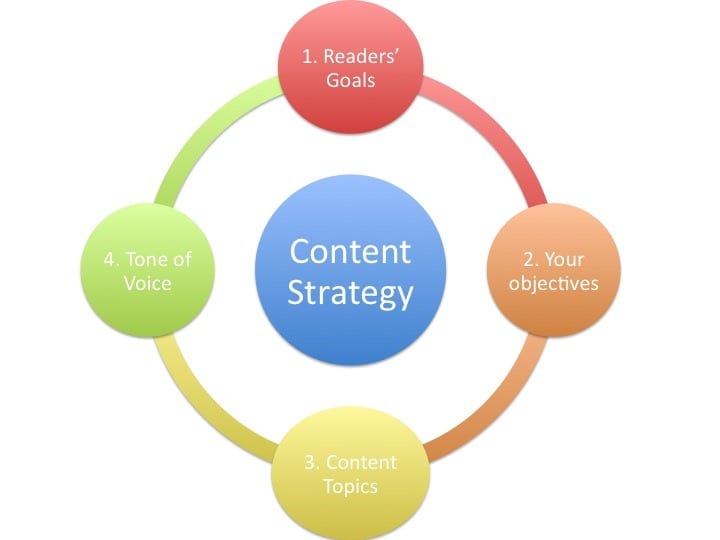
With companies planning to increase their digital marketing spending over the coming months, the spotlight is on online marketers to implement strategies that deliver high ROI. They need to take a hard look at their Internet marketing strategies, evaluate their efficacy and implement those they believe will help meet business objectives.
But the problem is all online marketers worth their salt are doing the same thing. They are putting every ounce of effort to ensure it is their brand that wins the battle for consumer mindshare. So, what is it that separates successful marketers from the ones that aren’t able to achieve tangible results?
In one word -- choices!
Successful online marketers make the right strategic choices more often than not; and even if they do get things wrong sometimes, they recalibrate, restrategize and correct course. Here are three choices online marketers must make to ensure they don’t go wrong with marketing deliverables:
1. Value over marketing.
This is a tricky one. Internet marketers must focus on value addition rather than promoting the brand and its products and services. The idea is to use a collection of marketing tactics to provide useful, actionable information to target customers. It doesn’t have to be all about your brand.
Using the 80-20 rule helps. Ideally, just 20 percent of information should center on your brand, the remaining 80 percent should add value to the lives of your target audience at some level. Think of marketing in terms of customer engagement rather than selling. This will not only help you acquire customers but also retain them over a period of time.
2. Relationship building over link building.
The era of link building is fading. Don’t get me wrong. The importance of links in online marketing remains intact, but you need to stop making a conscious effort to build links; instead, you must choose to build meaningful relationships.
Link building will happen naturally as you forge long-term relationships with your customers, niche influencers and other important stakeholders. Quick Sprout’s link building guide has a chapter on “relationship based link building” that is a must read on this subject.
Why is relationship building important? It’s because Google frowns on anything that even remotely resembles a link building tactic. It wants you to earn links naturally. But, why would influencers in your niche choose to link back to a post you’ve written, or allow you to publish content on their site?
They will only do so if they know and trust you. This is why “relationships” matter. The more personal your relationship with authority figures in your niche, the better it is for your link building efforts.
3. Substance over activity on social media.
We’ve heard industry experts and thought leaders holding forth on the importance of active engagement with existing and potential customers on social media. Yes, it’s important to achieve a fair degree of frequency, when it comes to sharing content with your target audience on social media, but frequency or regularity alone won’t cut it for you.
Your activities must be backed by substance. For example, you might be sharing links, images and videos, but if they don’t benefit your brand or your target audience, it will be of little use to your marketing efforts.
Each and every piece of content you share on social media should be shareworthy.
If you are sharing a link to an article written by a thought leader in your niche, think very carefully if it’s something your target audience will love going through. If it’s a video you are sharing, check whether it’s something your followers will appreciate. Otherwise, it makes very little sense for you to share that piece of content. You will be wasting your time and also that of your audience.
Marketers who’re getting the most out of social media marketing know when and how to share, but most importantly know “why they are sharing what they are sharing”.
Let me be very clear -- the right choices do not “guarantee” the results you are looking for, but definitely put you on course for achieving your marketing objectives. In the end, you also need to make your choices count.
Thursday, 22 January 2015
Social Selling Strategies
Are you getting all the sales you want from social media?
Do you wish your followers showed more interest in your products or services?
Social selling is not an exact formula for sales, but instead an end result from strong interactions with your business or brand’s community. As word-of-mouth becomes the new norm online, it’s important to know how to reach your prospects and customers in a way that will get their attention and meet their needs. That’s the strategy that will create more sales.
The Problem and the Benefit
In the midst of powerful social networks like Facebook, Twitter, Google Plus, Instagram, and YouTube the consumer has the edge on promoting a company or not. Public response is very quick, which can directly impact your business sales – up or down. Just take a look at this recent example from Best Buy, which prompted a public apology on Twitter after referencing a popular murder podcast called, Serial. The negative public response was overwhelming:
image: http://cdn.business2community.com/wp-content/uploads/2015/01/BestBuy_Tweet.png.png

It’s important to be relatable and non-controversial while maintaining open communication with your connections. Content should be at the top of your marketing strategy list along with a few other steps that will help your business or brand attract more leads and sales:
Create a sales page
Take advantage of services like LeadPages, or create your own landing page on your website where your social media fans and followers can learn more about what your company has to offer. Use these links in between other content that you share to avoid “selling” directly to your community.
Post a steady stream of quality content
Utilize your resources and target market research to feed your followers with information they will love. This can include articles that have previously been covered, or be updated information with a new twist. You can also repurpose your posts through infographics, presentations, and videos to create a variety in your mix. Visual content is especially popular on social media, and can generate a great deal of visibility like this example from a recent SlideShare presentation I published:
image: http://cdn.business2community.com/wp-content/uploads/2015/01/susan-slideshare.png.png

These types of images and videos are great to share on other popular networks like Pinterest, YouTube, and Google Plus, and short snippets can even be condensed to be featured on places like Vine and Instagram.
Actively participate in conversations
Be on alert for buzz around your tweets and posts on social media or join in on a conversation that could help your community. This can be done through social services like Hootsuite and Rignite, which make it easy to track your social feeds. Try to respond in a timely manner, especially when it comes to customer service issues.
Post helpful information and tips
Instead of making a sales pitch or asking your community to go to your website or join your network, draw them in with something of value instead. This can include contests, free reports, a coupon, asking their opinions, and so on. Not only will they appreciate the chance to win or participate, but will also be more inclined to share your content.
Social selling is not about the sale, but rather building trust with your fans and followers on social media who will in return reward your brand or business with word-of-mouth advertising online. People no longer respond to sales presentations until they know your company is one worth engaging with.
It’s good practice to use the available analytics on places like Twitter and Facebook to track your progress and learn where your conversions are coming from. Thankfully most social networks have this capability built-in for free, and provides great insight into how your content and conversations are performing. Just remember that social media is all about people, and the sales will follow!
http://www.business2community.com/social-selling/become-social-selling-success-4-tips-01116980
Thursday, 18 December 2014
Monday, 24 November 2014
Tony Robbins Shares His 3 Best Public Speaking Tips
 yTony Robbins gives a presentation in 2010.
Love or hate him, there's no denying that celebrity life coach Tony Robbins is an incredibly engaging public speaker.
For the past 30 years, people have paid hundreds, and sometimes thousands, of dollars each to attend one of Robbins' high-energy seminars. In addition to personally coaching powerful people like investing legend Paul Tudor Jones and President Bill Clinton, celebrities can often be found in his audience.
Oprah Winfrey said that Robbins' Unleash the Power Within event was "one of the most incredible experiences" of her life, and Al Gore was in the front row of Robbins' "Why we do what we do" TED Talk, which has now been viewed over 20 million times online.
We spoke with him recently about his new book "MONEY Master the Game" and used the opportunity to ask how he's able to be such an effective speaker. Here are his three fundamental tips for giving great presentations:
1. Know and respect your audience.
"That might sound basic and corny, but I don't see it that way. I want to know, just like when I work with an individual, what do they desire, what do they hate, what do they love, what are they hungry for, what's missing?" Robbins says.
"Because the more you understand what somebody wants, needs, and fears, the more you can figure out how to add value. I do my homework about the company, individuals in the company, leaders in the company, so I dig in. I interview people. I have a team of people who do homework for me, as well," he says.
2. Add more value than anyone expects.
Robbins says that in order to leave a lasting impression on your audience, you need to surprise them by going deeper than they predicted. The key to doing this, he says, is by truly caring about what you're saying.
"Don't ever speak publicly about anything that you're not passionate about and that you don't actually believe you have something truly unique to deliver," he says. "Don't get roped into talking about something that you don't really have passion for, and don't get roped into something you don't have expertise in. Why should somebody listen to you? If you're going to take somebody's time, you better deliver."
3. Tap your audience's emotions.
"We've all been put to sleep by somebody who's told us all these wonderful facts that didn't matter because information without emotion is not retained," Robbins says. A great presenter draws you in and takes you outside of yourself. That's why you need to transport the audience.
And the way to move an audience is by becoming moved yourself, which can only happen if you're being genuine.
"So if you're just giving some frickin talk you've memorized over and over again, you're going to have a flat affect," he says. "If you've just got a bunch of visuals on the screen that are leading your talk, hang up your shoes and get the hell out of there."
"You need to be in the moment and flexible to make it real and raw," Robbins says. "You'll enjoy it, they'll enjoy it, and you'll be memorable."
Watch Robbins' 2006 TED Talk:
http://uk.businessinsider.com/tony-robbins-public-speaking-tips-2014-11?r=US
Subscribe to:
Posts (Atom)