Showing posts with label digital marketing. Show all posts

Tuesday, 9 June 2015

What Do the Pinterest/Instagram ‘Buy’ Buttons Mean for PR?

Last week, Pinterest andInstagram both turned heads by confirming rumors that had been floating around for some time: both would be entering the e-commerce market via “buy buttons” and related tools that connect sponsored posts directly to revenue streams for the first time.
We know this means bigger credit card bills for social media devotees everywhere. It also means that marketers can finally enter dollar amounts in the “ROI” columns of their social media spreadsheets.
But what about PR agencies and their retail clients? We asked some industry veterans for their takes.
From Marco Iannucci, director of strategy at SparkPR:
“The new Instagram and Pinterest units are about instant gratification for the consumer. It changes the whole last-touch attribution model.  You’re no longer driving people to a site, you’re delivering a brand experience within another brand.
The question for the PR paid/earned model is how do you optimize the experience? Every piece of content you put out now is critical. It’s so much more important to be on point. For launches, it could be the digital equivalent of how Beats By Dre launched with Lebron and the Olympic team showing up in Shanghai wearing them.”
From Jasper Nathaniel, VP of business development and strategy at social influence/insights platform Crowdtap:
“Pinterest and Instagram have emerged as leading channels for brand and product discovery, so it’s no surprise that those platforms are evolving their ad offerings to better bridge the gap between social media and commerce.
That said, these are places where real people–not brands or media properties–shape the conversation. Ads are secondary to the overall experience, so PR agencies need to follow the rules of the road and prioritize authenticity and relevance over disruption.”
instagram stock
From Dave Weinberg, CEO of Pinterest-focused influencer platform Loop88:
“We work with many agencies – public relations and advertising – and find that the firms know the value that Pinterest brings for their clients. And Buy It pins take that to the next level.
With Buy It Pins, marketing campaigns are taken to the next level for agencies and clients. Beyond brand awareness and creating original content, the Buy It pins take those pins and makes it possible for people to buy and reach the ultimate conversion.”
From Eric Berto, program director at Seattle’s Voxus PR:
“[These] announcements along with other social commerce opportunities such as Twitter’s buy button and Facebook’s attempt to offer vendors direct purchases all come with a number of opportunities and challenges.
With the exception of the Pinterest button, the others are positioned as ad units, which can be prohibitive for SMBs or those hoping to simply pilot the program. In some instances it even asks merchants to switch their payment processing services, which can be a logistical nightmare as well as an excuse expensive switch.
When looking at this as a PR person, I consider the evolution of the paid, earned, owned and shared model. With the guidance that PR should contribute to a company’s bottom line, there could be some interesting opportunities for direct-to-consumer activations. We are now able to create visual stories that target specific audiences and position a brand directly in front of a consumer, or even influencers. Data has long shown that visuals increase engagement. This is an opportunity to see if visuals increase conversions, which should be a goal of any PR program.”
The basic lessons, then, it that clients must be even more strategic about the material they share on these networks–and that the act of drawing a direct line from a brand’s story to a consumer’s point of sale has never been more important.

Saturday, 25 April 2015

10 Top Trends Driving The Future Of Marketing

Daniel  Newman writes about the Future of Marketing  and the rise of Mobile Marketing :

Marketers are constantly looking into the future, trying to predict the next big trend, be it for their brands or their clients. Naturally, marketers are preoccupied with questions like: What is the next big campaign? How can we turn our client into the “next big thing”? What is the next hot trend going to be in retail? Etc.  Everyone wants to the answers. Knowing this, what do some of the top minds in marketing predict for their own futures? A recent article by Jeff Beer on Fast Company Create collected 25 future trends that will change the marketing landscape five years from now based on top innovators in marketing and advertising. After reading this, I started to ponder what I saw as the top trends driving marketing.
Here are the 10 trends that I think are going to have the biggest impact on the future of marketing.

1. Mobile is going to become the center of marketing. From cell phones to smartphones, tablets to wearable gadgets, the evolution of mobile devices is one of the prime factors influencing the marketing world. As the focus is shifting to smaller screens, brands will be able to strike up a more personalized relationship with their customers by leveraging the power of mobile.
2. Transparency will dictate brand-customer relationships. Currently, customers are seeking more engagement from brands. This trend will continue with customers becoming more demanding in their expectation of transparency. Genuine brands – the ones that “walk the talk” and create real value – will be rewarded. This means brands that still haven’t made their customer dealings transparent are headed to a future of doom.

3. The need for good content will not slow down. Ever. Content, particularly visual content, will rule the roost in the online marketing world, evolving into various forms and disrupting the conventional marketing models. Moreover, the speed at which a brand can create amazing content will play a part in their success.
4. User-generated content will be the new hit. The power of user-generated content will surpass branded content as brands begin to relinquish control of their own brands’ marketing to their customers. From online reviews, to social media posts and blogs, this means there will be a strong need for brands to create a positive impact in their consumers’ minds. In response to this model of content production, content co-creation between brands and consumers will become a popular trend.

5. Social will become the next Internet. Social will become an integral part of the “broader marketing discipline.” As its impact grows stronger, most brands will fully transition their marketing efforts to social channels. As such, social has the full potential to become not just one of the channels but the channel.Top Marketing Trends
6. Brands will own their audience. By cultivating brand community and entering into direct conversations with their customers, brands will begin to own their audience in a way that will create loyalists and brand advocates. In the future of marketing, branding and marketing efforts will have their seeds rooted in what customers are talking about. The customers’ responses and feelings toward the brand will dictate future campaigns. Essentially, if the customers are happy, they’ll gladly wear the marketer’s hat and do what is needed to bring their favorite brand in focus.
7. Brands solely-focused on Millennials will go out of relevance.Brands will need to understand that the millennials are not a niche “youth” segment but a generation of people who will ultimately give way to a newer generation. Therefore, millennial-focused brands will have to change their game to stay relevant.
8. Good brands will behave like product companies and not like service companies. While service companies aim to create a happy customer and look forward to a contract renewal, product companies thrive on innovation. So, for brands of the future, customer satisfaction and retention will not be enough. They will need to innovate more efficiently to create more value for their customers. However, great service will NEVER go out of style.
9. Personalized, data-driven marketing will become more refined.There is a difference between data-driven marketing and intrusive marketing. While the former is based on relationship-building, the latter is nothing but old-school push marketing wrapped in a new cover. The difference between these two formats will become even more prominent in future. Marketers who focus on relationship building will be rewarded, while intruders will be shut out.
10. More accurate metrics will surface. What most brands do in the name of measuring marketing success is look at hollow “vanity” metrics such as likes, shares, or tweets. Even in terms of data mining, we are still developing more sophisticated means to capture the right data. Many ideas are hypothesized, but few are practical. The future will witness the rise of better analytical tools to help marketers gauge the success of their campaigns.

Wednesday, 22 April 2015

The Strategic Play: How Marketers Can Combine Elements To Avoid Missed Mobile Opportunities

With myriad ways for brands to get their message out, columnist Soo Jin Oh points out key strategies to help marketers stay ahead of the competition.


mobile-smartphone-commerce-payment-ss-1920
A multitude of strategies are available to marketers to help push customers along the purchase funnel. While these marketing tactics may be widely available, the slow adoption of such strategies and industry technologies places a limitation on the success of certain verticals and brands. This especially rings true for industries traditionally built on in-store purchases.
During the 2015 Automotive News World Congress conference in January, a panel of auto industry experts discussed the necessity for better adoption of online tools to improve customer satisfaction in the auto industry. Jared Rowe, president of car-shopping site AutoTrader.com, said that the average vehicle shopper visits almost nine sites before buying a car and that mobile vehicle consumers are demanding thorough, easy-to-navigate websites.
In order to best attract and convert car shoppers — or any online consumer — marketers must adopt a few key strategies to ensure that time spent online effectively pushes consumers toward a purchase.

Integrate Mobile Strategies And Attribution Models

Mobile marketing strategies and attribution models should go hand in hand.
Several studies prove mobile is a highly effective channel, one that all marketers must incorporate into their omni-channel strategy. While these studies show promise for mobile, other statistics show the majority of conversions are still taking place on desktops and in-store.
To determine the effectiveness of mobile channels, brands should be diligent in adopting a cross-device attribution model. This will allow marketers to get the most accurate reporting on their customers’ mobile usage and what converts to sales.
While attribution is critical to understanding the origins of conversions, it’s also important that brands deliver streamlined messages across all channels, taking advantage of each channel’s features.
For example, your mobile creative should include prompts for users to help them locate brick-and-mortar shops, watch mobile video, and share customized products across their social media channels.

Incorporate CRM Data And Understand Evolving Metrics

Incorporating customer relationship management (CRM) data into digital strategies is imperative for marketers to be able to effectively upsell or cross-sell customers. Without CRM integration into digital channels, marketers lose out on a big opportunity to help tie online and offline attribution together.
One of the biggest missed opportunities for brands using data-driven display advertising is that they aren’t focusing on the right metrics, meaning that the wrong goals are given to each partner and ultimately, they’re not driving incremental value to the client.
Prospecting partners should have goals that focus on driving new users to an advertiser’s site and measure metrics such as cost per view (CPV), while site retargeters should focus on cost per acquisition (CPA). Instead, clients are still giving the same CPA goal to all partners and not creating relevant or effective goals for different strategies.
When Magnetic (my employer) ran search retargeting for an auto advertiser, the prospecting goal was CPV, and for site strategy we had an LFA (lower funnel activity) goal. This enabled the marketer to look at the value that search retargeting contributed to the campaign separate from the site strategy.
The advertiser also had cross-device targeting where the brand message was streamlined across all channels, but took advantage of each channel’s features. For example, the mobile creative was an MRAID where users were able to do things like locate a dealer, watch mobile video, and share their customized car to social platforms.
Offline measurement also was used to analyze the digital campaign by seeing how the online portion of it was correlated with having cars drive off the lot.
The auto campaign was based around an omni-channel strategy. It was able to measure all touch points through attribution and provide results across partners so that the campaign could be optimized for the best results.
It’s important to remember that one break in the funnel — that’s one missed touch point and lack of measurement along the journey – can cause an entire marketing strategy to be ineffective.
Marketers must acknowledge that there are many opportunities out there, from mobile, video, offline data and more, which can help brands get their message out and positively impact sales. The ones that put the proper metrics in place will have an advantage over the competition.

Friday, 3 April 2015

Twitter, Facebook and LinkedIn offer new ways for advertisers to reach users


Twitter on mobile phone

The world’s biggest social media platforms have expanded their advertising offerings beyond their own platforms to third-party websites and apps, monetising their data at scale in an effort to compete with Google. Their approach is primarily two-fold: improving audience profiling; and providing advertisers with access to an individual’s anonymised social media profile ID to track them across devices and across channels outside of the social platform.

Twitter

Twitter recently introduced a new offering that allows advertisers to select from more than 1,000 partner audiences provided by service providers Acxiom and Datalogix, in the Twitter ads user interface. This allows advertisers to target specific Twitter audiences, as the company clarified in a 5 March blog post:
“By using a partner to provide the desired audience, an auto brand can connect with audiences that are in-market for a new car. A CPG company can reach customers that have previously purchased products in their category. And luxury brands can limit campaigns to shoppers who earn a household income above a certain threshold.”
This offering comes on the back of the micro-blogging platform’s 2014 launch of Fabric, a suite of products that allows mobile developers to integrate Twitter feeds into their apps and sites so that advertisers’ promoted tweets appear across apps and websites while still feeling native to the particular app or website. In other words, social advertising is no longer confined to the Twitter platform.

Facebook

Late last year, Facebook re-launched Atlas after buying it from Microsoft in 2013. Atlas allows advertisers to target Facebook users across devices and channels, on apps and websites outside of the Facebook ecosystem. Atlas tracks a full customer journey, from initial ad impression to final purchase, across multiple devices. This is an important development for advertisers, as a significant proportion of online purchases are made on a different device from the one on which the relevant advert was first viewed.
Rather than use cookies, Atlas uses Facebook’s persistent ID, which enables the tracking of a user across mobile and desktop and enables advertisers to use Facebook’s data and knowledge of individuals in order to target consumers across third party websites and apps.
In February, Facebook expanded Atlas and announced new partnerships with customer relationship management agency Merkle and software company Mediaocean, which join Havas, Omnicom and Publicis’ tech arm VivaKi. Between them, these five companies control tens of billions of pounds in ad spend.
Alongside Atlas, the Facebook Audience Network (similar to Twitter’s new partner audiences) allows advertisers to target audiences based on demographic and behavioural data, primarily on Facebook itself.

LinkedIn

On the heels of Facebook is LinkedIn, which launched its Lead Accelerator and new Network Display in February. With more than 300 million professionals registered, LinkedIn is well placed in the business-to-business marketing industry, which is reported to be valued at $1bn.
Lead Accelerator, similar to Facebook’s Audience Network and Twitter’s partner audiences, allows businesses advertising on LinkedIn to divide their audiences into segmented groups and find out more about visitors to their LinkedIn pages based on login data.
Network Display, similar to Facebook’s Atlas, uses both user login data and other profile identifiers to target LinkedIn users outside of the platform. Thanks to its partnership with AppNexus, LinkedIn has access to a vast number of third party publisher sites on which it can target LinkedIn users.

Expanding advertising offerings beyond the boundaries of social media’s own ecosystems

In the last six months, a general trend has emerged among leading social media platforms to expand their advertising offerings beyond the boundaries of their own ecosystems by using their unique relationships with end-users and their data to deliver targeted advertising to third-party website and apps which is effective across multiple devices and channels, allowing advertisers to follow the full consumer journey from start to finish.
Digital marketing which is social is no longer just about advertising on the social platforms themselves but about using data and expanding the reach of social into other areas of an end user’s online experience.

http://www.theguardian.com/media-network/olswang-partner-zone/2015/mar/23/twitter-facebook-linkedin-advertisers-reach-users


Thursday, 12 March 2015

Facebook Patents Clever Way To Advertise Just To Important People


Celebrities aren’t like you and me. They’re better. Or at least Facebook thinks they’re worth more money.
Convince experts and influencers to like something, and everyone will follow their lead. The question is how to identify who these special people are, and Facebook’s justpatented one of the trickiest ways yet.
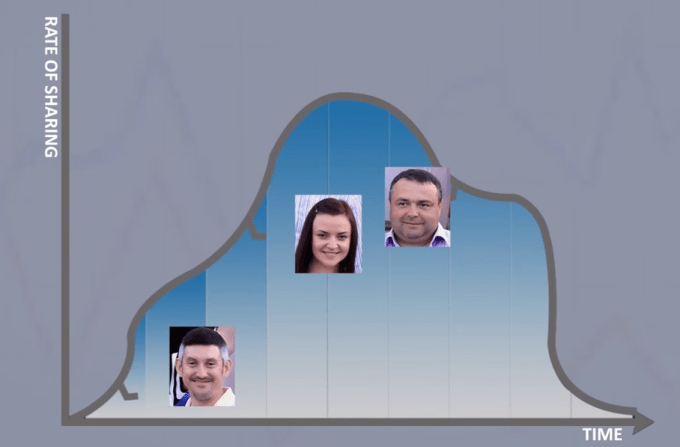
The idea is that Facebook could watch the rate at which a piece of content like a link is shared, then figure out whose posting led to a sudden increase in share rate in their network. Those people are the influencers, and the people that they discovered the content from are the experts.
Facebook could then target those people with ads and presumably charge businesses a boatload to reach them. It makes perfect sense. Why would it cost the same amount to reach someone famous, powerful, or widely cited as someone whose endorsement won’t sway people?
Influencers can be identified as people whose shares caused spikes in the local share rate
Spotted by PatentYogi and Smartup Legal the “Identify experts and influencers in a social network” patent was first submitted by Facebook’s ads head Andrew “Boz” Bosworth in 2011, but was just granted this week. In patent mumbo jumbo it “comprises identifying the first users who caused the non-zero rate of sharing of the element of information to locally increase significantly.”
Other tech giants like Google, Yahoo, and Microsoft have received patents for this so-called “Influencer Marketing” but none use as clever of a technique do determine who the VIPs are. Google’s looks for volume of connections, Yahoo’s can look at how influential someone’s own followers are, and Microsoft aims to assemble a set of influencers with the largest unduplicated audience.
influencer Marketing patentBut these all have the same flaw. They use connection count as a proxy for influence rather than measuring influence itself. Someone who aggressively networks and builds up tons of shallow connections could be mistaken for an influencer even if no one believes them
Facebook’s method directly measures influence by determining not just who has the most followers, but whose followers re-shared the content. Even if someone had a smaller following, they could be an influencer in a specific topic if their word inspires others to share. And the patent further identifies experts because they’re who first gets influencers to share.
Marketing to these people is obviously quite lucrative. If they recommend something, their followers will parrot that endorsement far and wide. Bosworth explains that “experts and influencers may be identified for any subject matter…at any granularity. For example, experts and influencers may be identified for all types of digital cameras, or only for single-lens reflex (SLR) digital cameras, or only for SLR digital cameras made by Canon, Inc.”
If you’re Canon, the ability to target Facebook ads to people who are experts and influencers on Canon products would obviously stir up more sales than targeting people who simply Like Canon or photography. Virality could make influencer demographics even more juicy than people who’ve shown buying intent by visiting Canon purchase pages.
Facebook doesn’t always productize its patents but this one seems reasonably easy to integrate. The social network could sell these expert and influencer demographics to advertisers at a frothy markup with its category targeting tool.
Klout may have given influencer marketing a smarmy name, but Facebook’s found a way to do it effectively at scale without publicly judging people. And Facebook’s method doesn’t require participation (or even consent). If you’re famous, and on Facebook, now it knows how to put a price on your head.